
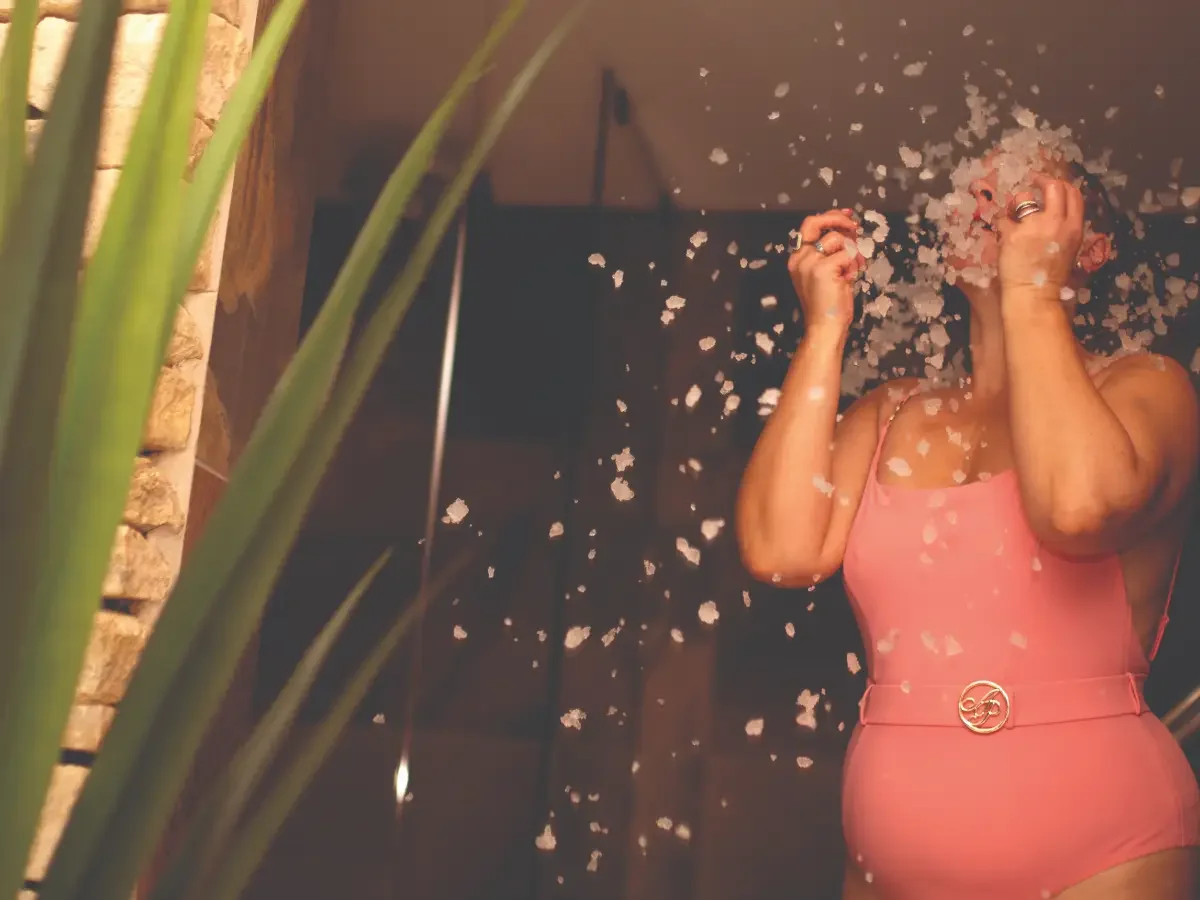
From saunas and steam rooms to cold plunge pools and ice fountains, we explore how heat, cold and rest can be brought together within a considered spa experience.
A thermal suite brings together experiences with very different characters. The dry warmth of a sauna, the humidity of a steam room, the freshness of a cool shower and the stillness of a relaxation space each offer a distinct change of atmosphere.
The design challenge lies in how these experiences connect.
Distances, thresholds, visibility and places to pause influence how easily guests understand the space and find their own pace within it.
At Butterscotch Design, we consider the thermal journey as a whole, bringing together facility selection, spatial planning and atmosphere from the earliest stages.
Starting with the right mix
There is no single thermal offer suited to every spa.
A residential wellness retreat may need a different combination of facilities from a hotel spa, a day spa or a private wellness suite. The available space, expected guest numbers and way the business operates all influence the brief.
Saunas, steam rooms, hydrotherapy, cooling experiences and relaxation areas need to be considered together. Each facility should have a clear role, with sufficient capacity and space around it to work comfortably.
Early planning also helps establish the technical requirements, maintenance access and operational implications of the proposed mix.
This creates a foundation for an experience that suits the property and can be managed effectively over time.
Giving heat experiences their own character
Saunas and steam rooms introduce different forms of warmth, alongside distinct opportunities for materials, lighting and sensory design.
Within a sauna, timber, seating arrangements and views can shape an experience that feels intimate, sociable or connected to the landscape.
Steam rooms require a different material and technical approach. Tiled or solid surfaces, lighting and the form of the seating contribute to the atmosphere, while specialist coordination addresses the demands of heat and humidity.
Where a spa includes several heat experiences, each should offer a clear reason to visit. Variation can come through the setting, scale, outlook and atmosphere as well as the facility itself.
Making cooling part of the design
Cooling experiences deserve the same attention as the heat facilities.
Depending on the brief, these might include showers, ice fountains, cold plunge pools, snow experiences or access to fresh air. Each introduces different requirements for space, drainage, cleaning and guest use.
Their position within the layout is particularly important. Guests need to be able to identify the available options and reach them easily, without awkward crossings through busy circulation areas.
The surrounding space also needs consideration. There should be room to approach, pause and move away comfortably, with appropriate surfaces, handholds and clear information developed alongside specialist advice.
Providing choice allows guests to engage with the facilities according to their preferences and the guidance provided by the operator.
Creating an intuitive route
A thermal journey should be easy to understand, including for someone visiting a spa for the first time.
Clear sightlines, recognisable entrances and a legible layout help guests discover what is available. Changes in lighting and materials can signal a transition, while concise signage provides practical information.
The aim is to create a setting that supports exploration without requiring constant explanation.
Circulation also needs to accommodate different patterns of use. Some guests will move between several experiences; others may spend longer in one area or return directly to relaxation.
Allowing for these choices helps the suite feel comfortable and unhurried.
Giving rest enough space
Rest is an essential consideration within the layout of a thermal suite.
Seating should be convenient to reach, with enough separation from active routes to allow guests to settle. The right balance will depend on the scale of the spa and whether the area is intended for quiet relaxation or gentle conversation.
Drinking water, robe hooks and somewhere to place personal items support the experience through simple, practical details.
Views towards a garden or landscape can add interest without demanding attention. In more enclosed settings, tactile materials and carefully controlled lighting can create a quieter place to pause.
Connecting the experience to its setting
A thermal suite can express the character of the place around it.
At Champneys Forest Mere, specially treated pine trees and rustic timber helped connect the interior with its woodland setting. The snow cabin and woodland-inspired Jacuzzi bath formed part of that wider design approach.
Outdoor settings offer further possibilities. Our proposed Alfresco Spa Retreat at Silverlake brought sauna, steam, cedar hot tubs, drench showers and relaxation into a thermal garden shaped around the lake.
In each setting, the relationship between facilities and their surroundings helps give the journey a distinctive identity.
Bringing the whole journey together
The success of a thermal suite depends on how its spaces work together throughout the day.
Capacity, accessibility, cleaning, supervision and maintenance all influence the guest experience. Early coordination between the operator, design team and specialist suppliers helps address these requirements as the concept develops.
At Butterscotch Design, we combine this practical thinking with an understanding of atmosphere, materials and guest flow.
From the first moment of warmth to the final place of rest, each part of the journey should feel considered, connected and appropriate to the people using it.