
What makes a thermal journey truly memorable?
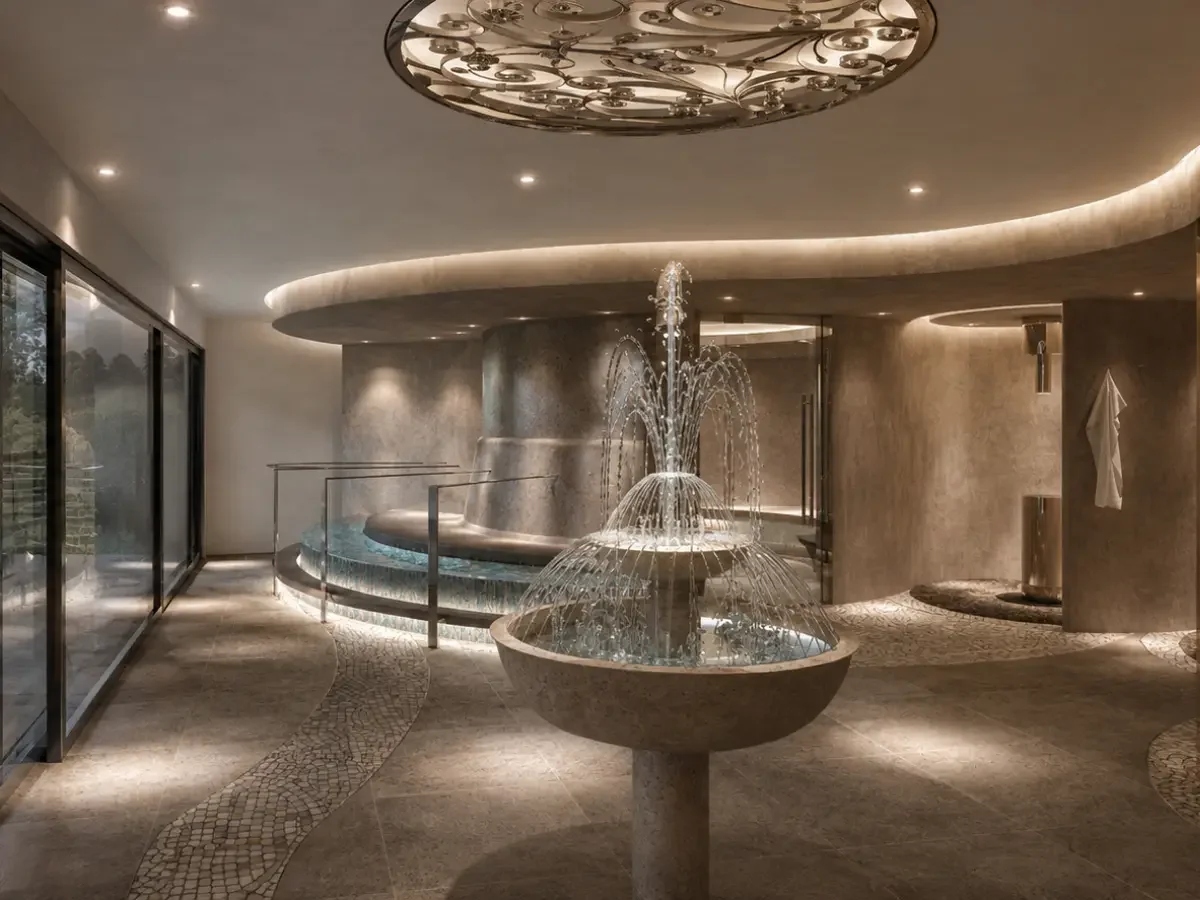
Exploring how thoughtful spa design brings together heat, water, atmosphere and sensory experiences to create a restorative and engaging wellness journey.
The sequence of heat, water, cooling and relaxation experiences plays an important role in shaping how guests enjoy a spa. Each element brings its own sensory qualities, while the transitions between them create a natural rhythm of stimulation, recovery and rest.
At Butterscotch Design, we consider the thermal journey from the earliest stages of spa planning. The positioning of facilities, movement between spaces, lighting, materials and opportunities for relaxation all influence the guest experience.
Our approach combines specialist knowledge of spa facilities with interior design, creating thermal environments that are intuitive to navigate, engaging to explore and connected to the character of their surroundings.
Designing the thermal journey
A successful thermal suite has a natural flow, allowing guests to move comfortably between different experiences while enjoying the freedom to explore at their own pace.
The arrangement of facilities is central to this. Saunas, steam rooms, hydrotherapy pools and cooling experiences need to be positioned with an understanding of how guests will use them, both individually and as part of a wider thermal journey.
The sequence of experiences can gradually introduce warmth, build intensity and provide opportunities for cooling and recovery. Changes in temperature, humidity and atmosphere create variety, while well-positioned relaxation areas encourage guests to spend time enjoying the environment.
Circulation also requires careful consideration. Clear routes between facilities, comfortable transitions between wet and dry areas and discreet operational access all contribute to a thermal suite that functions efficiently.
We develop these relationships through detailed spa space planning, balancing the practical requirements of each facility with the overall guest experience.
Creating atmosphere through sensory design
Lighting, materials, acoustics and water each contribute to the atmosphere of a thermal suite.
Within saunas and steam rooms, subdued lighting can create a sense of enclosure and intimacy. In contrast, natural daylight around a swimming or hydrotherapy pool introduces openness and a connection to the surrounding environment.
The choice of materials helps establish the character of each experience. Warm timber, textured stone, smooth ceramics and reflective surfaces introduce different tactile and visual qualities, while carefully controlled lighting highlights their natural characteristics.
Sound also influences the environment. The gentle movement of water can create a calming backdrop, while quieter spaces benefit from acoustic separation from more active facilities.
By considering these elements together, we create distinct atmospheres within the thermal journey, allowing each experience to have its own identity while maintaining a cohesive design.
Bringing nature into the thermal experience
The relationship between spa design and the natural environment is something we explore throughout our work.
At Champneys Forest Mere in Hampshire, the surrounding woodland provided the inspiration for a nature-led thermal experience.
Our design introduced real pine trees, rustic waney-edge timber and natural materials to create the feeling of moving through a forest. The combination of natural textures, atmospheric lighting and innovative spa facilities established a distinctive character throughout the space.
The thermal experiences included the UK’s first real snow cabin, offering guests an invigorating cooling experience, alongside a woodland-inspired Jacuzzi bath designed for warmth and relaxation.
The contrast between these environments became a defining feature of the spa, with the surrounding woodland influencing both the visual design and the sensory experience.
The importance of relaxation between experiences
Relaxation areas are an essential part of thermal spa planning, providing guests with opportunities to rest and recover between experiences.
Their location within the thermal suite influences how naturally guests use them. Comfortable seating close to the main facilities allows for shorter pauses, while more secluded relaxation spaces encourage longer periods of rest.
Lighting, furniture, temperature and acoustic comfort all contribute to creating an environment where guests feel comfortable spending time.
At Champneys Springs, our design concept explored the relationship between thermal experiences and relaxation within a contemporary, hammam-inspired environment.
The thermal suite was developed around a series of atmospheric spaces, using curved architectural forms, warm materials and carefully positioned lighting to establish a sense of intimacy.
Adjacent relaxation areas introduced softer furnishings and subtle divisions between seating spaces, offering guests varying degrees of privacy while maintaining a connection to the wider spa environment.
This approach allows the thermal and relaxation facilities to work together as a continuous experience, with changes in atmosphere encouraging guests to move naturally between activity and rest.
Designing for comfort and functionality
Behind the atmosphere of a thermal suite lies a considerable amount of technical planning.
Each facility has its own requirements for temperature, humidity, ventilation, drainage and maintenance. These need to be integrated into the architectural design from the outset.
The positioning of steam rooms and saunas, for example, needs to account for servicing requirements and the management of heat and moisture. Hydrotherapy pools require careful coordination of water treatment systems, plant equipment and surrounding circulation areas.
Floor finishes, drainage details and transitions between wet and dry environments also influence guest comfort and safety.
Our specialist spa knowledge allows us to consider these requirements alongside the interior design, developing solutions that support both the guest experience and the day-to-day operation of the spa.
For hotel and destination spa operators, this integrated approach is particularly valuable, helping ensure that facilities remain practical to maintain and comfortable to use over time.
Creating a distinctive spa experience
Every spa has its own architectural setting, guest profile and operational requirements. Understanding these influences helps establish the appropriate balance of thermal facilities, relaxation spaces and sensory experiences.
For some projects, this might involve creating an intimate thermal environment with subdued lighting and rich natural materials. Others may benefit from open, light-filled spaces that connect directly with gardens, courtyards or the surrounding landscape.
At Butterscotch Design, we bring together spa planning, specialist technical knowledge and interior design to develop thermal experiences with a strong sense of identity.
The result is a cohesive journey through heat, water and relaxation, designed around the people who use it and the character of the place.